At Sanofi, we believe empowerment comes from shared experiences, education, and vital information for self-advocacy.
We’re grateful for the ability to share messages of hope from Kidney Transplant Connectors (KTC) who participated in the program. Listen and watch as Amanda and Rodolfo tell their stories of what it’s like to undergo a kidney transplant from both a donor and recipient perspective.
Accessibility title
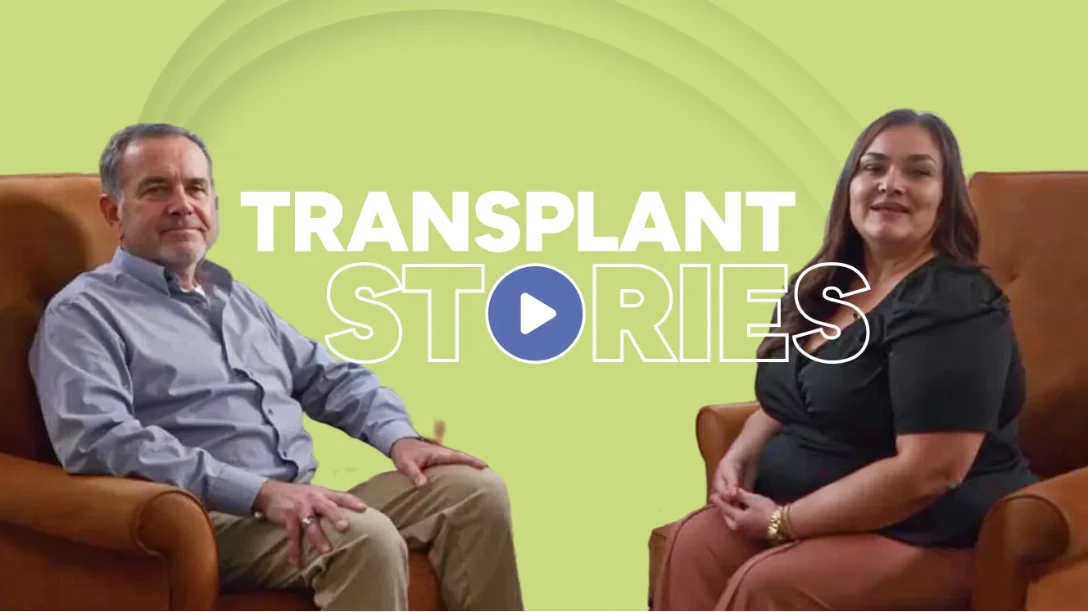
Transplant Stories: Amanda D. and Rodolfo H.
Amanda:
Hi, my name is Amanda and I'm a living kidney donor. I donated my kidney to my father in 2016, and it was the best decision I've ever made. I'm delighted to be here with my friend, Rodolfo.
Rodolfo:
Hi, I'm Rodolfo and I'm a kidney recipient. I'm glad to be here to encourage those amazing donors like Amanda and tell you, if you're on the waiting list, there's hope.
Amanda:
So Rodolfo, let's start from the very beginning. When did the doctors tell you that you needed a transplant?
Rodolfo:
Well, I was diagnosed at the age of 30 with polycystic kidney disease. I knew it came on through my mother's side of the family. She died when I was four-years-old. I was one of the lucky ones with the benefit of early detection. I was 51 when my doctor told me I need to start dialysis and I need a kidney transplant. I spent seven months on peritoneal dialysis before I got my transplant. I wish I would've heard some of your stories. It would've been a lot of help for me.
Amanda:
That's very kind of you, Rodolfo. Thank you. Yes, my journey started when my father was diagnosed with stage three kidney cancer. Because of that diagnosis, he had to start dialysis and be on dialysis for five long years. That fifth year was very, very rough for him. He became very weak and very tired. My father is a very strong Hispanic man and never once said that he was tired or sick, but we could see it. And we especially saw it on the morning of Thanksgiving. We went to my parents' house for Thanksgiving, like we did every year, but this year was different. When we walked in, my father, who had been on peritoneal dialysis for five years, I could tell he was just a little somber. I could tell that his dialysis perhaps the night before was not a good treatment.
And my strong and courageous father sat at the table with us. And for the first time, I saw my dad tired and weak. And my father told me, "I will never ask you for anything. I will never ask anyone for anything." My father had a lot of pride. And so instead, my father and my mother had visited their transplant center. The doctors had given them some papers on living donation. And so he passed those papers towards me. And as I was reading them, my father began to cry and he said, "I'm tired. I'm tired and I feel some days that I can't go on because dialysis is so hard for me."
And in that moment when I saw for the first time my father be just a little weak and a little tired, I knew what I had to do. That night, I went home and I filled out the online questionnaire. Two weeks later, I was at the hospital doing labs. And a week before Christmas, I got the call that I was a match. And so for Christmas morning, I gave my father a gift and it was a video that I had made. And I told him in the video, "Dad, you've always been there for me. Please let me be there for you. I'm a match." Rodolfo, your donor was also very close to you as well, correct?
Rodolfo:
Yes. Her name is Jamie. We worked together for the past 30 years. In fact, Jamie decided she was going to give me her kidney before I even went to dialysis. Well, I could see your father's point of view because I was scared something might happen to Jamie, and I was afraid that I might reject the kidney.
Amanda:
Yes, you and my father were alike like that, which is why I think it's so important and educational to talk about transplants and donation in our culture.
Rodolfo:
Definitely. Transplantation has gone a long way. Can you tell us more about your surgery?
Amanda:
Yes, definitely. My surgery went great. I got to the hospital on a Thursday, had my surgery that day, and was home by Friday the next day. On Saturday, I did have a lot of pain, but I took my medication and I felt fine afterwards. For the following two weeks, I had bouts of exhaustion, felt very tired, but I listened to my body and I rested when needed. After about three weeks, I went back to the hospital for labs. Everything came back great. And about four weeks after my donation, I was back to myself. So Rodolfo, what was your transplant like?
Rodolfo:
I was a little bit nervous, but my doctors reassured me that everything was going well through my surgery and procedure. My recovery went well, except that for me it was a little longer, not because I had any complication. I had to wait three months before I went back to work because my doctor told me my job was too physically demanding.
Amanda:
That's such an inspiring story. Thank you for sharing with us. I think all donation stories are inspiring. Unfortunately, my father lost his battle to cancer four years after he had his transplant. But those four years were amazing and I would do it all over again if I could. The decision to donate has changed my life and my father's life immensely. However, there are many times where I feel my life hasn't changed much at all. The only thing that has changed for me is that I can no longer take ibuprofen.
Rodolfo:
Have to say transplantation has changed my life. It's been 10 years. I'm 62 and I feel fantastic.
Amanda:
That's so wonderful, Rodolfo. Thank you for sharing. I feel like education is very important in our culture, in our community. And so I think it's very important to talk about donation and transplantation.
Rodolfo:
Yes, I believe there's still unique barriers facing the Latino community to understand about donation and transplantation.
Amanda:
I agree. I think education is important, but I think tradition plays a big part too. And when it comes to kidney issues, there's little education, little awareness, and sometimes not even curiosity.
Rodolfo:
I experienced that impact in my family too. I have 11 siblings. Six of them had kidney issues. Out of those six, it's only two of us that were still alive, me and my sister, and we both had a kidney transplant.
Amanda:
Thank you so much for sharing your story with us today. If you are considering being a donor, I hope that our stories have inspired and encouraged you to learn more about the process. You can make a difference.
Rodolfo:
And for those who are on the waiting list, please stay positive. Lean on your family and friend, especially if you're on dialysis. That can be tough. Don't be afraid to share your story. There's Amandas and Jamie out there. They need to hear it. It's important to stay informed, especially for our Latino community.
MAT-US-2403529-v1.0-09/2024
Amanda D.* and Rodolfo H.* share their real-life transplant stories.
The story of each patient reflects the real-life experiences of people who underwent a kidney transplant. Individual experiences may vary.
Accessibility title
Transplant Stories: Amanda D. and Rodolfo H.
Amanda
Hola, soy Amanda y soy donante de riñón en vida. En 2016, doné mi riñón a mi papá. Voy a compartir mi historia y ojalá que te da esperanza. Yo estoy aquí con mi amigo, Rodolfo.
Rodolfo
Hola, soy Rodolfo y soy receptor de riñón en vida. Me da mucha alegría estar aquí para alentar a otros increíbles donantes como Amanda y decirte que si estás en la lista de espera, hay esperanza.
Amanda
Vamos a empezar del principio, Rodolfo. ¿Cuándo te dijeron que tenías que tener un trasplante?
Rodolfo
A la edad de 30 años me diagnosticaron con kidneys policísticos. Sabía que los podría tener por el lado de mi madre. Ella murió a la edad de 36 años por una enfermedad renal.
Yo fui uno de los beneficiados de una detección temprana. A la edad de 51 años fue cuando mi doctor me dijo que necesitaba diálisis y necesitaba también un trasplante de riñón. Fue cuando empecé en la búsqueda de un riñón.
Tuve el pertenido diálisis por siete meses. Y quizás si hubiera escuchado historias como la tuya, hubiera sido una gran esperanza para mí.
Amanda
Ah, tú eres muy amable, Rodolfo. Gracias. Para mí, mi experiencia comenzó cuando diagnosticaron a mi padre de cáncer.
Él tenía cáncer y solo que él tenía que empezar el diálisis inmediatamente. Él estuvo en diálisis cinco años y ya para el último año de diálisis, él estaba bien débil. Mi papá es hombre hispano.
Mi papá es bien macho. Él nunca dijo que él no se sentía bien. Y un día, un día de acción de gracia, fuimos a la casa de mis papás, como todos los años.
Pero este día, se miraba cansado. Y él dijo, yo nunca voy a pedir algo de ti. Pero aquí hay unos papeles que me dieron mis doctores.
Y nomás puso los papeles en la mesa. Y con lágrimas en los ojos dijo, estoy cansado. Tu papá está cansado.
Y hay unos días que siento que ya no puedo más. Y yo sabía en ese momento lo que yo tenía que hacer. Entonces, en esa noche, sin decir a nadie, llené un formulario en el Internet.
Tres semanas después, yo ya estaba en el hospital haciéndome pruebas. Dos semanas después, me hablaron en el hospital y me dijeron que yo era un par. En la mañana de Navidad, hice un video anunciándole, papá, yo soy tu par.
Rodolfo, tu donante también estaba bien cerca de ti, ¿verdad?
Rodolfo
Sí, se llama Jamie. Hemos trabajado por más de 30 años. Incluso Jamie ya había decidido donarme su riñón antes de que yo me sometiera en diálisis.
Porque ella ya sabía todo mi historial sobre mi salud. Pero yo entiendo a tu padre porque yo también tenía miedo de que Jamie le fuera a pasar algo, que se enfermara, que yo fuera a rechazar el riñón. Era mi más temor, pero todo fue bien.
Amanda
Sí, tú y mi papá se sentían igual. Pero es bien importante hablar de trasplante y donación, especialmente en nuestra cultura.
Rodolfo
Definitivamente han cambiado mucho los trasplantes de órganos. ¿Y cómo fue tu cirugía, Amanda?
Amanda
Mi cirugía fue muy bien. Yo entré al hospital en un jueves y me regresé a la casa el siguiente día, el viernes. El sábado sí tenía mucho dolor, pero me tomé mis medicamentos y me sentí mejor.
Dos semanas después de la donación, sentí olas de fatiga, pero escuché a mi cuerpo y descansé cuando lo necesité. Ya como tres semanas después, regresé al hospital a hacerme pruebas y todo salió bien. Ya después de cuatro semanas, me sentí muy normal.
Rodolfo, ¿cómo te fue tu día de trasplante?
Rodolfo
Pues fíjate, Amanda, que fue muy bien. Nos vimos en el hospital, Jamie y yo, a las seis de la mañana, porque fue cuando nos citaron. Entró ella primero al quirófano.
Dos horas después me hablaron a mí. Todo fue de maravilla para mí. Estuve un poco nervioso, pero mi equipo de doctores estuvo genial.
Me contestaron todas mis preguntas y dudas que tenía sobre mi operación. Para mí fue un poco que duró, se me hacía que duré mucho, pero no porque hubo una complicación, es porque yo quería regresar a trabajar y no me dejaron que empezar a trabajar hasta después de tres meses, porque como mi trabajo se requiere de mucho esfuerzo físico, me tuve que esperar tres meses.
Amanda
Esa historia es muy alentadora. Tristemente, cuatro años después, el cáncer regresó y mi papá falleció. Pero esos cuatro años fueron maravillosos.
Muchos días se me olvida que doné mi riñón. Lo único que ha cambiado en mi vida es que no puedo tomar medicinas como ibuprofen.
Rodolfo
Debo decir, definitivamente, mi trasplante de riñón ha cambiado mi vida por completo. Hace 10 años que fue y ahorita tengo 62 años y me siento genial.
Amanda
Qué maravilla, Rodolfo. Yo creo que es bien importante de hablar de trasplante y donación en vida de riñón.
Rodolfo
Sí, Amanda, porque yo creo que todavía existen barreras únicas en la comunidad hispana.
Amanda
Así es, Rodolfo. Yo creo que la educación es bien importante en nuestra comunidad.
Rodolfo
Sí, Amanda. Fíjate que yo también lo he sentido en mi familia. Nosotros somos doce de familia y de esos doce, seis tuvimos la enfermedad de kidneys policísticos.
Y de los seis que tuvimos la enfermedad, no más dos estamos vivos, que es mi hermana y yo que tuvimos un trasplante de riñón.
Amanda
Gracias por compartir, Rodolfo. Si están pensando donar, ojalá que nuestras historias los han inspirado. Tú puedes hacer una gran diferencia.
Rodolfo
Y a aquellos que estén en la lista de espera, es muy importante mantenerse positivos, confiar en su familia y amigos, porque es difícil estar en diálisis. No tengas miedo de compartir tu historia. Acuérdate que hay Amanda y Jamie que necesitan escuchar tu historia, porque es muy importante para nuestra comunidad latina.
MAT-US-2403530-v1.0-11/2024
Partnering together to raise awareness about minority donors
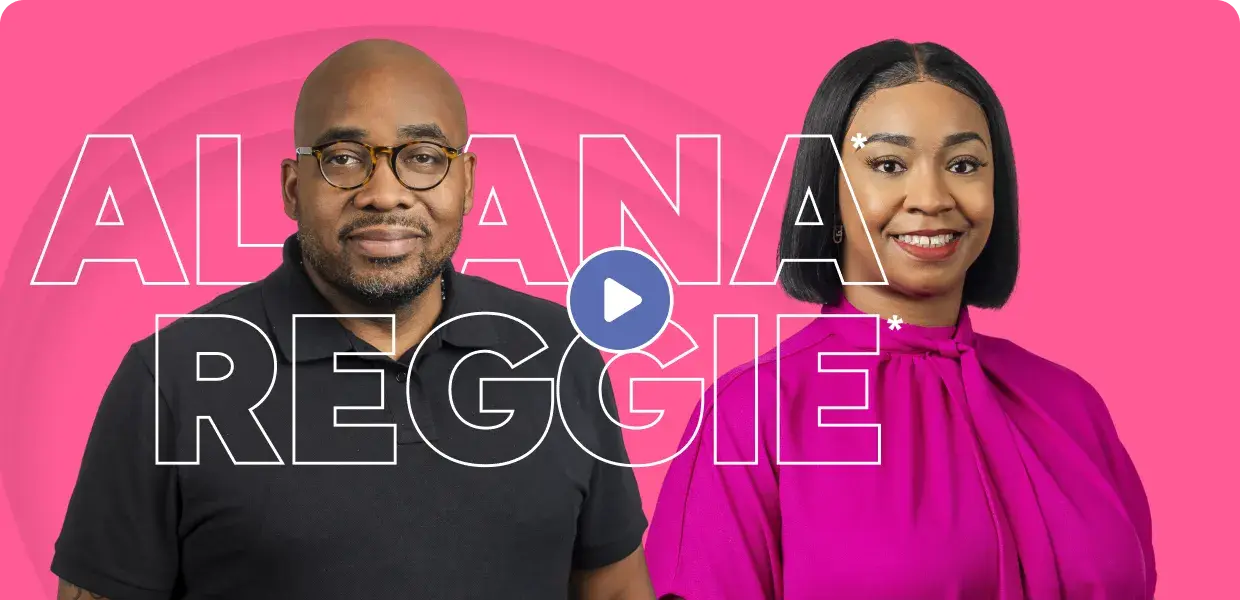
“If you’re on the transplant wait list, please self advocate and educate yourself”
– Alana and Reggie*
Accessibility title
Behind the Numbers: Alana H. and Reggie C.
OPENING GRAPHIC:
Behind the Numbers
a personal look at underrepresented minorities in Kidney Transplantation
NEXT GRAPHIC:
2020
Although deceased donor kidney transplant rates were equivalent among non-White and White recipients, living donor kidney transplant rates differed by race/ethnicity
National data. Organ Procurement and Transplantation Network.
NEXT GRAPHIC WITH ALANA’s VO:
2020
Black recipients were 6x less likely to receive a LDKT
National data. Organ Procurement and Transplantation Network.
ALANA VO:
In 2020, Black recipients were roughly six times less likely to receive a living donor kidney transplant.
GRAPHIC BUILDS TO INCLUDE THE FOLLOWING TEXT WITH REGGIE’s VO:
2020
Hispanic recipients were 4x less likely to receive a LDKT
National data. Organ Procurement and Transplantation Network.
REGGIE VO:
And Hispanic recipients were roughly four times less likely to receive a living donor kidney transplant.
CUT TO REGGIE AND ALANA ON-CAMERA, INTERSPERSED WITH B-ROLL
GRAPHIC:
Reggie, Kidney Donor
Alana, Kidney Recipient
Each patient story reflects the real-life experiences of individuals who underwent a Kidney Transplant. Individual experiences may vary. These patients were compensated for their time creating this video.
ALANA:
Seeing so many people on the waitlist made me a fierce advocate for myself. I learned that it was up to me to shorten my wait time by educating myself and being on more than one waitlist. I knew that I would have to educate myself as well as my community.
We've pretty much put boots to the ground. We've gone out in the communities, passed out information, asked questions and pointed people in the right direction.
REGGIE:
What I love about advocating is just getting the message out and seeing people's reaction to getting information that they didn't have previously.
GRAPHIC with photo of young Alana:
Alana was diagnosed the day she graduated from 6th grade
ALANA VO:
I learned of my chronic kidney disease when I was 13 years old.
GRAPHIC with video of Reggie and Alana walking:
Alana is the only sister to 3 older brothers
including 1 who donated his kidney to her
ALANA VO:
During my first transplant, I was lucky enough to have a living donor willing to donate to me, which was my brother.
When I had my first transplant, I thought I was healed. Although I know a transplant is a treatment and not a cure, I thought it'll be a one-time deal for me.
GRAPHIC: 1 TIME DEAL
CUT TO ALANA and REGGIE ON CAMERA
GRAPHIC BUILD WITH ALANA ON CAMERA:
10 years after transplant
32 years old
2nd kidney transplant
ALANA:
10 years after my first transplant, when I was 32 years old, I learned that I would need a second kidney transplant.
FOOTAGE OF REGGIE AND ALANA WITH ALANA’S VO:
I am beyond grateful that, not only did I have one willing living donor, but I had two, my husband.
GRAPHIC BUILD WITH REGGIE’S VO and FOOTAGE OF REGGIE AND ALANA WITH FAMILY:
Reggie knew Alana was THE ONE after the 1st date
REGGIE:
What I love about Alana is the fact that she's a loving person. She makes everyone feel comfortable. She lights up the room. She's the opposite of my personality; I'm a big introvert. She's outgoing, the social butterfly. She's a great mother, great wife she's great to her friends, great to her family.
GRAPHIC BUILD WITH B-ROLL OF FAMILY OUTSIDE:
Reggie was denied 3 times and had to have 2 kidney stone removal surgeries
Alana went on dialysis for a year while they waited for approval
Alana had her 2nd kidney transplant in September 2016
ALANA VO:
It's like once we were denied, a fire was lit in both of us and we became tougher, had a game plan and we executed it.
After our transplant, I had the energy and stamina to grow our catering business even more.
I specialize in seafood and soul food, as well as healthy meal prep dishes.
GRAPHIC BUILD OVER ALANA’s VO:
Alana and Reggie have served 1,000s in their community
and have started a nonprofit to reach many more
I've served the mayor of Washington DC. I've served people at the Department of Commerce. I've done pop-up events, I've done private events, I've cooked in people's homes. I've done private events.
Owning our own business is both rewarding and challenging. I have to do everything. I'm my own boss, but I get to do what I love to do every day.
REGGIE VO:
And me, I just do whatever the boss tells me to do.
CUT TO REGGIE AND ALANA ON-CAMERA:
REGGIE:
That's reality. No fiction there. (laughter)
ALANA ON CAMERA:
Both Reggie and I are proud of the nonprofit that we started to serve healthy meals to dialysis patients and persons living with chronic kidney disease in disadvantaged neighborhoods, to offer them better chances to have better lab results and possibly shorten their time on a transplant wait list.
GRAPHIC WITH ALANA ON CAMERA:
You are more than just a number
ALANA:
You are more than just a number. If you're on the transplant wait list, please educate and advocate for yourself. You could possibly shorten your time on the wait list.
REGGIE:
And if you're considering donating, please get the facts. You never know you could be changing someone's life for the better.
CLOSING GRAPHIC
Intended for U.S. Residents Only. ©2023 Genzyme Corporation. All rights reserved.
Sanofi is a registered trademark of Sanofi or an affiliate.
MAT-US-2305579-v1.0-07/2023
“In 2020, Hispanic recipients were 4x less likely to receive a living kidney donor transplant (LDTK), and Black recipients were 6x less likely to receive a LDKT.”
– David*
Accessibility title
Behind the Numbers: David R.
PAPER EDIT DAVID RODRIGUEZ
David:
In 2020, Hispanic recipients were roughly four times less likely to receive a living donor kidney transplant, and black recipients were roughly six times less likely to receive a living donor transplant.
These numbers make me sad. You are more than a number, I am more than a number.
I had some abdominal pain once I was at work and I ended up at the hospital. And after a while, a group of doctors came over and they told me that I was at stage five kidney failure.
GRAPHIC: Stage 5 Kidney Failure
facing dialysis three times a week at four hours during the day, it was one of those most difficult things that I had to go through.
GRAPHIC: 3 Times a Week flips to 4 Hours a Day
I had to resign from my work. it was completely 180 losing my job and then to rely on government assistance and had to move back to my parents’ house.
GRAPHIC: 180 with the degree symbol
After two years, I got tired of driving four hours. And so, I decided to move to San Antonio to be closer to the transplant center.
Being independent and having a disease is very difficult, especially for a person like myself.
Anything that they would tell me to do, I would do it. Anything that has to be done even though I was exhausted, even though I was broke, but I would still make that effort to do whatever what needed to be done in order for me, in case they did call me for a transplant.
I had an empty apartment with an air mattress, a TV on the floor, and a prayer candle.
I lived like that until I got the phone call from my transplant coordinator, that I was part of a paired exchange donation, that a living kidney donor had come forward, and my prayers were answered.
On the day of my transplant, it took four hours for the surgery
GRAPHIC: 4 Hours
Like so many other patients after my kidney transplant, I wanted to pay it forward. In fact, I made it my profession.
Two months after my kidney transplant, I was hired to work at the marketing department with the Transplant Center who performed my transplant. I continued to be an advocate. I got involved with my community. I got involved nationally with organizations to promote kidney awareness.
Part of my advocacy is to focus on the disparity of people here around our Hispanic community here in South Texas.
I visit dialysis units, an average of 200 dialysis units per year.
The greatest of honor that I have is when I get approached from someone that says, "You educated me enough to come forward and donate my organ to my father or to my mother."
Everybody has an opportunity to make a difference in people's lives by learning about kidney donation.
One important message that I'd like to share as an advocate is also to be your own advocate. Learn more about yourself. Learn more about getting involved in support groups. Educate yourself. Get involved in your community.
When we share our stories, when we advocate for each other, we may help a loved one shorten their time on a wait list. When we educate one another, we may encourage someone to become a donor. Remember, you are more than a number.
MAT-US-2401391-v1.0-05/2024
* These are actual patients.
Each patient story reflects the real-life experiences of individuals undergoing kidney transplantation. Individual experiences may vary.
Sanofi does not provide medical advice, diagnosis, or treatment. The health information contained herein is provided for general educational purposes only. Your healthcare professional is the best source of information regarding your health. Please consult your healthcare professional if you have any questions about your health or treatment.